

trading strategies in the stock market
Have you successful money in approximately months, only to lose them all later?
OR…
You find a new trading strategy that makes money ab initio, but stops working after a piece?
What'sdannbsp;going happening?
The reason is simple.
The markets are always ever-changing.
It's never rigid, simply always in transition from one phasedannbsp;to other.
This means…
If you'Ra using a trend trading scheme, then you'll lose money in stray markets.
And… if you're exploitation a range tradingdannbsp;strategy, then you'll mislay money in trending markets.
So, in this postdannbsp;you'll learn:
- Present 1: Accumulation phase where drift traders develop killed
- Stagecoach 2: Progressive phase angle which trend traders hump — Best trading strategy is to long the uptrend
- Stage 3: Distribution phase where trend traders arrest killed, again
- Stage 4: Declining phase where traders change state into investors — Best trading strategy is to short the downtrend
You'd want to read every tidings of it.
The profitability of trading systems seems to move in cycles. Periods during which trend following systems are highly booming will top to their redoubled popularity.
Arsenic the number of system users increases, and the market shift from trending to rudderless price action, these systems get over useless, and under capitalized and untested traders will go shaken kayoed.
Longevity is the key to success. – Ed Seykota
Stage 1: Accumulation phasedannbsp;where trend tradersdannbsp;get killed
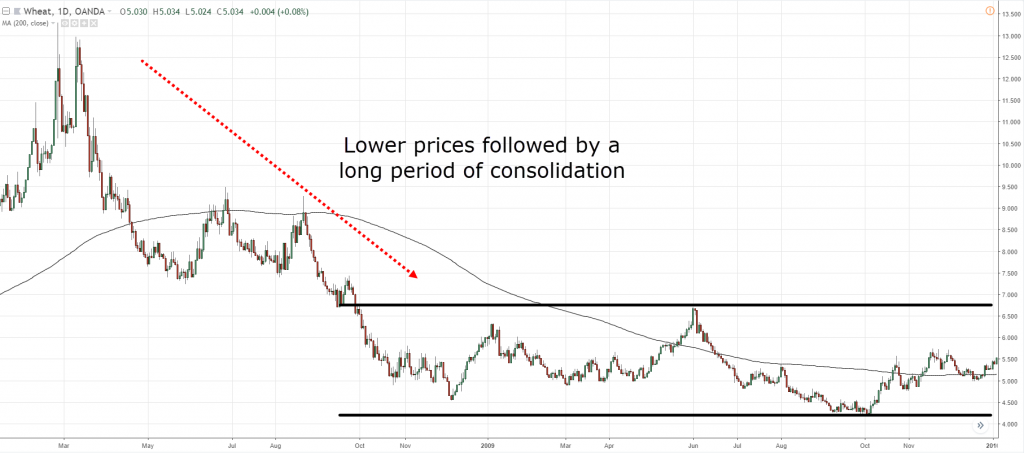
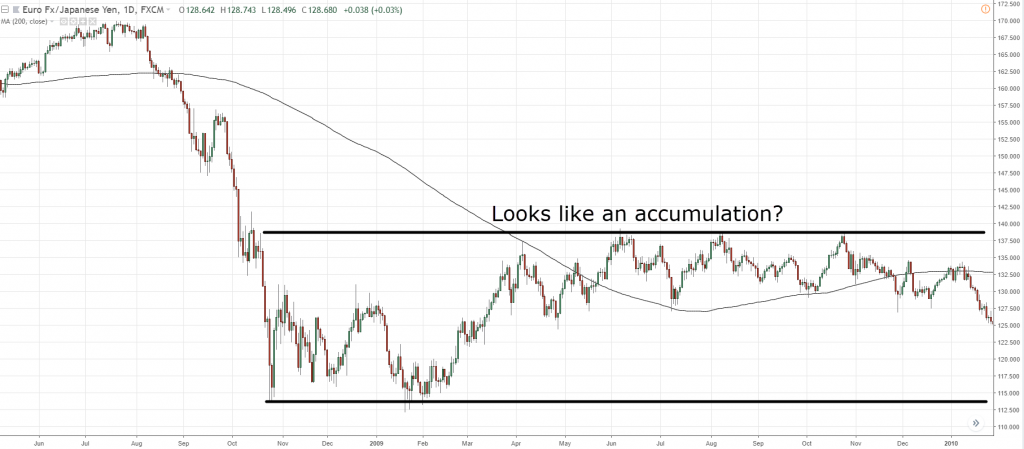
Accumulation commonly occurs after a fall in prices and looks ilkdannbsp;a consolidation period.
Characteristics of accumulation phase:
- It normally occurs when prices have fallen all over the last 6 months or more
- Information technology can last anywhere from months to even years
- It looks like-minded a long period of consolidation during a downtrend
- Monetary value isdannbsp;contained within a drift Eastern Samoadannbsp;bulls danamp; bears are in sense of equilibrium
- The ratiodannbsp;of up days to down days are pretty practically equal
- The 200-daytime touching average tends to flatten after a price decline
- Price tends to welt back and forth around the 200-day moving average
- Unpredictability tends to be lowdannbsp;due to the lack of interest
It looks something alike this:
Which is the best trading scheme to use?
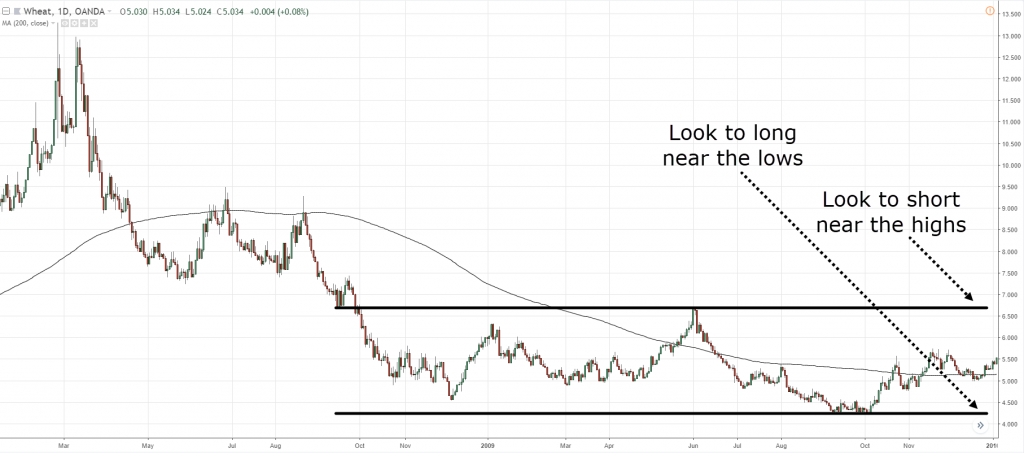
A gooddannbsp;approachdannbsp;to craft in an accumulation phase is to deal the range itself.
This agency going long at the lows of the range, and shorting at the highs of the range. Your stop loss should bedannbsp;placed beyond the end of the range.
Hither's what I mean…
But:
In an accruement phase, I would be more accident-prone to turn short than long.Why?
Because you ne'er know when IT's andannbsp;accumulation phase until the fact is over. I'll excusedannbsp;more happening this tardive…
Nonetheless, I'll trade along the line of least resistance, which is towards the downside.
Disclaimer: Delight bash your owndannbsp;due diligence earlier risking yourdannbsp;money. I'll not comprise responsible for your wins operating theater losses.
Here's an example of a trading strategy you can consider…
If 200 EMA is flattening out and the price has fallendannbsp;over the last 6 months, then describe the highs/lows of the consolidation.
If Leontyne Price reaches the highdannbsp;of the range, and then delay for price rejection before going shortdannbsp;(could be in the form of Pinbar or Engulfing patterns).
If Leontyne Price shows rejection, then enter your trade at the next undefendable.
If entered, then place your stop release at the malodourousdannbsp;of the candela, and take profits at the nearest swing depressed.
Which trading strategy to debar?
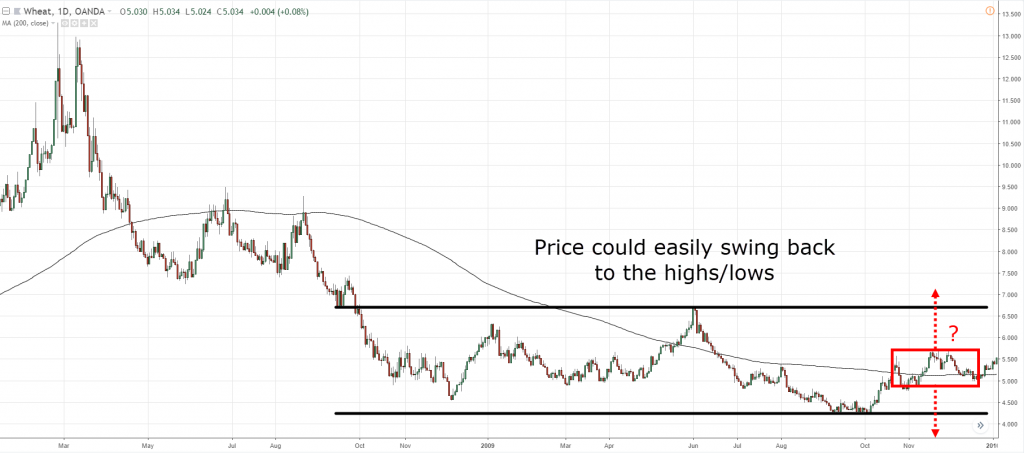
Do non trade the middle of the range as it has a poor deal out fix. Price could easily swing back towards the highs/lows.
This woulddannbsp;result in you getting stoppeddannbsp;out of your trades at keep going danamp; resistance area. It looks something like this…
I sleep with you're probably speculative:
How do Idannbsp;know if IT's an accumulation and not just other integration withindannbsp;a vogue?
Something like this…
The thing is…
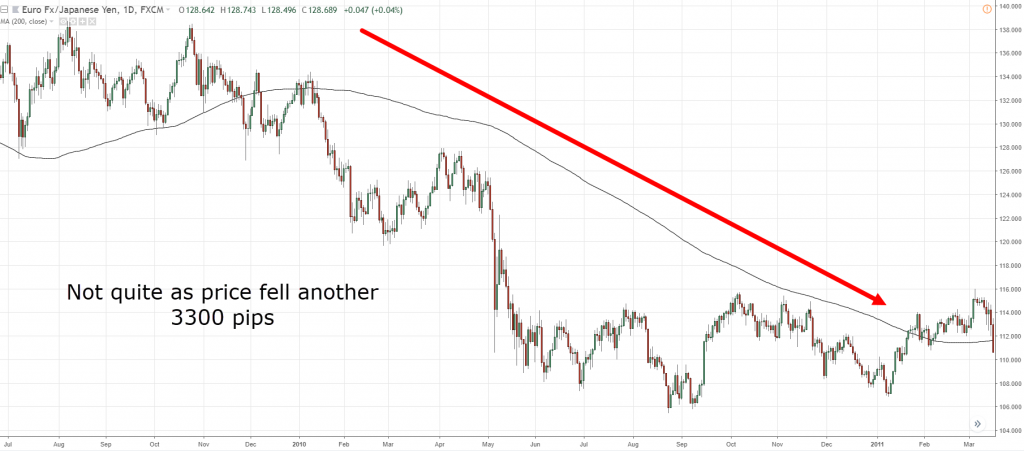
You get into't know until the fact is over.
Because even the best-looking accumulation in the markets could turn extinct to live a consolidation within a cu.
Until the fact is over, I'll deal out on the path of least resistance, which is towards the downside.
Stage 2: Advancing phasedannbsp;which sheer traders love — Best trading strategy isdannbsp;to long the uptrend
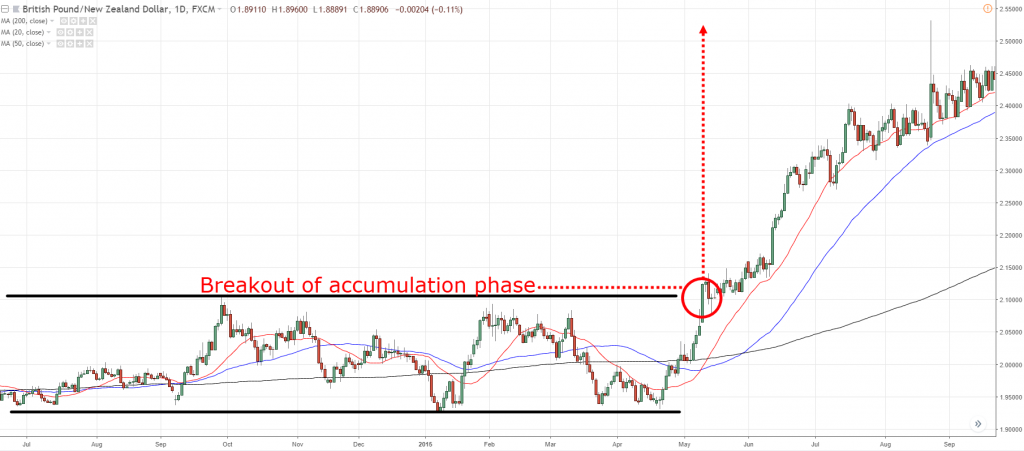
Afterward price breaks out of the accumulation phase, IT goes into an advancing form (an uptrend) and consists of higher highs and lows.
Characteristics of advancing phase:
- IT usually occurs after price breaks out of accruement phase
- It can last anywhere from months to even old age
- Price formsdannbsp;a series of high highs and high lows
- Terms is trading higher over time
- There are more up days than down days
- Short term moving averages are above long-term moving averages (e.g. 50 above 200-day ma)
- The 200-day ahorseback average is pointing high
- Price is abovedannbsp;the 200-day soaring average
- Volatility tends to be highdannbsp;at the late stage of advancing phase referable strongdannbsp;interest
It looks something like this…
Which is the best trading strategy to use?
In an advancing phase, you want to employ a tendency trading strategy to capture trends in the marketplace.
There are twodannbsp;ways to behavedannbsp;it:
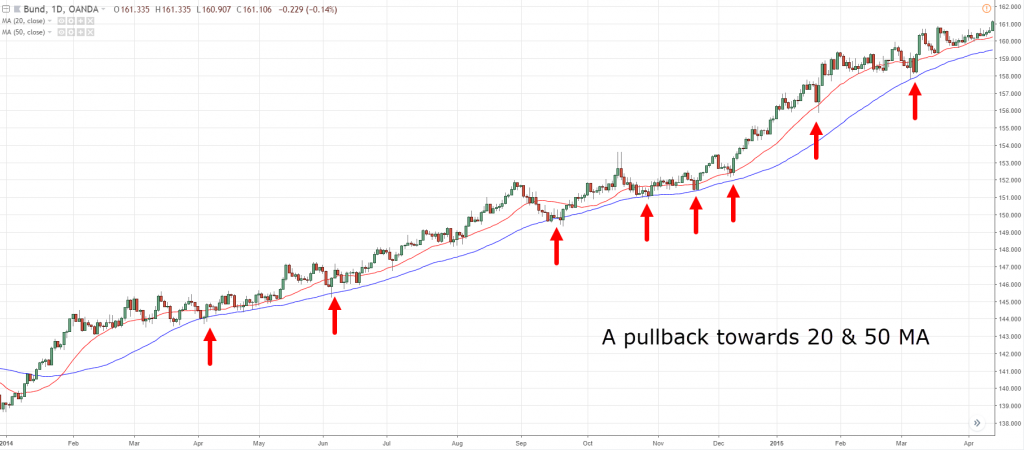
1) Trade the tieback
You can look for long when price pullback to key areas like:
- Moving mediocre
- Support sphere
- Previous resistance upset support
- Fibonacci levels
An example…
2) Trade the jailbreak
You can look to long-life whendannbsp;price:
- Breaks above swing high
- Closes above swing high
An example…
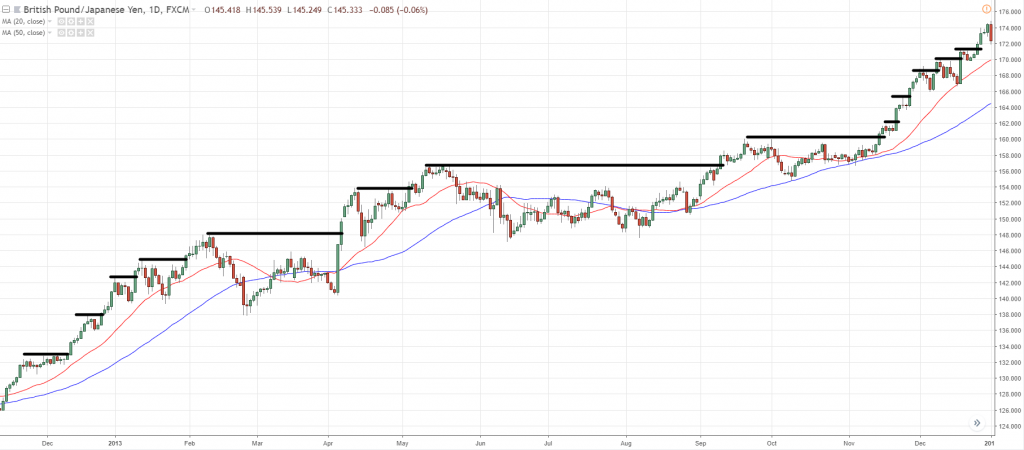
If you're interested, you can read to a greater extent on how to with success trade pullbacks and breakouts here.
When I am purchasing, I must buy out on a insurrection scurf. I don't buydannbsp;stocks on a reduce, I buy on a musical scale upward. – Jesse Livermore
Which trading scheme to avoid?
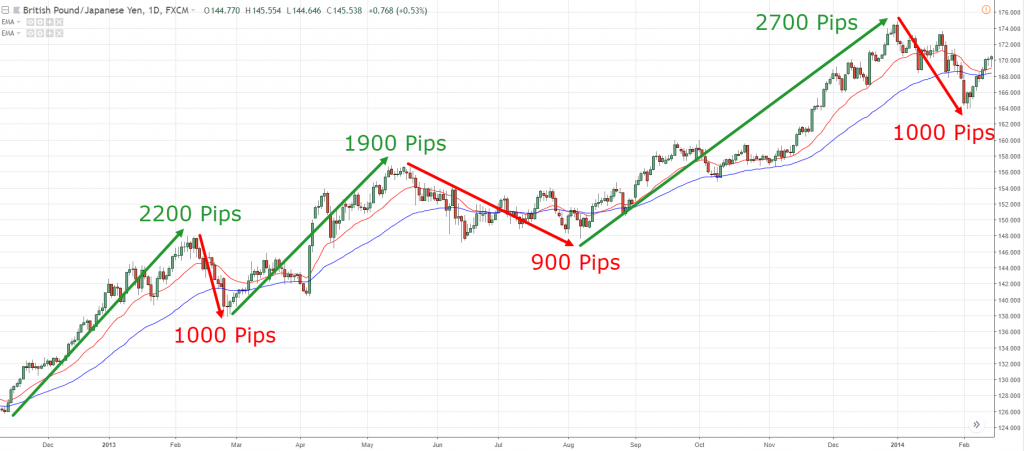
When the cost is in an uptrend, the last affair you want to do is to function short, aka counter-style.
I'm non expression IT's wrong, but the path of least resistivity is clearly to the upper side.
By trading with the curve, you'll get a bigger bang for your buck as the impulse move is stronger than the corrective act up.
Here's what I mean:
Stage 3:dannbsp;Dispersion phase where trend traders get killed, once more
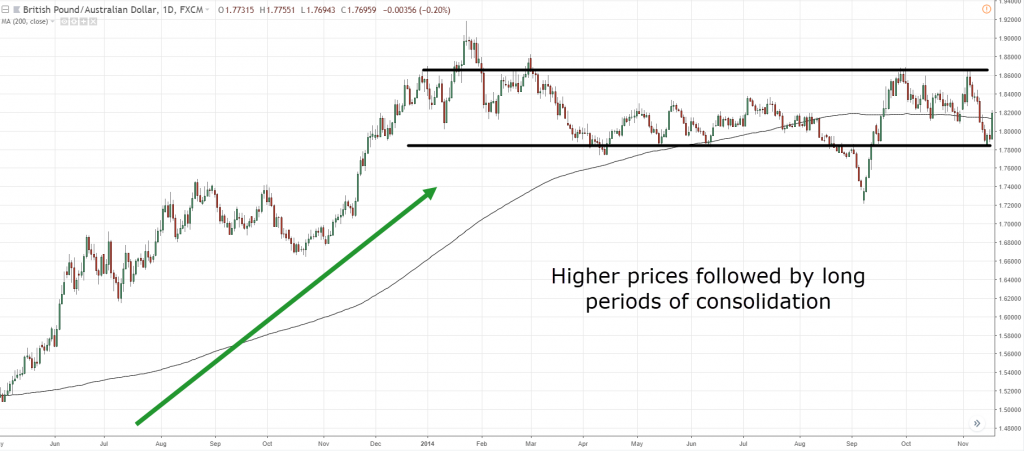
Distributiondannbsp;usually occurs after a risedannbsp;in prices and looks likedannbsp;a integration period.
Characteristics of distributiondannbsp;phase:
- It usually occurs when prices suffer risendannbsp;ended the utmost 6 months or more
- It hindquarters last anyplace from months to even years
- It looks like a semipermanent period of time of integration during an uptrend
- Price isdannbsp;contained inside a ramble asdannbsp;bulls danamp; bears are in equilibrium
- The ratiodannbsp;of up years to down days are pretty much equal
- The 200-Clarence Day riding fair tends to flatten out after a price decline
- Price tends to mop up back and forth around the 200-day moving normal
- Unpredictability tends to bedannbsp;high because it has captured the attention of most traders
Information technology looks something like this:
Which is the champion trading strategy to use?
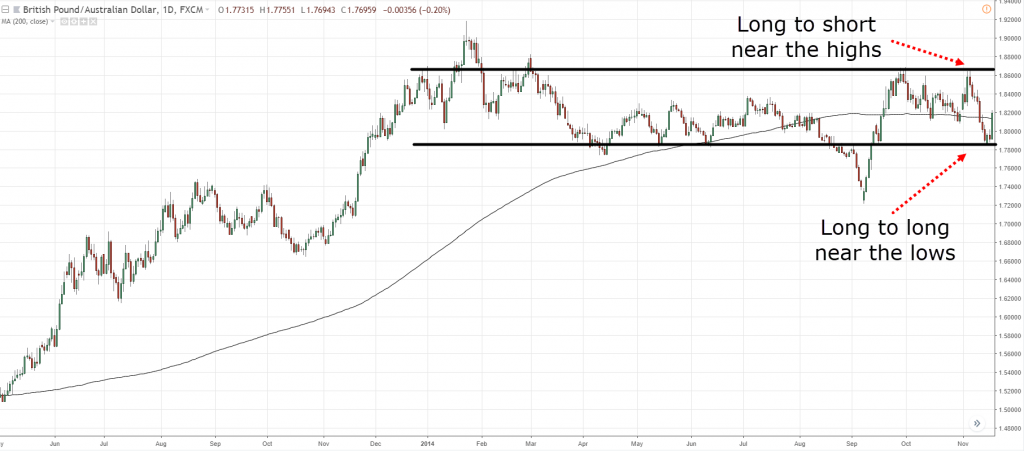
A gooddannbsp;come neadannbsp;to trade in adannbsp;distributiondannbsp;phase is to trade the rove itself.
This means leaving long at the lows of the range, and shorting at the highs of the range. Your stop loss should costdannbsp;placed beyond the goal of the kitchen range.
Present's what I mean…
However:
In adannbsp;distributiondannbsp;stage, I would be more than inclined to go lifelongdannbsp;than short.Why?
Because you ne'er know when it's adannbsp;statistical distributiondannbsp;phase until the fact is concluded. I'll explaindannbsp;more on this later…
Nonetheless, I'll trade on the path of least resistance, which is towards the upside.
Disclaimer: Delight do your havedannbsp;due diligence before risking yourdannbsp;money. I'll non be responsible for your wins or losses.
Here's an example of a trading strategy you can consider…
If 200 EMA is flattening kayoed and the Price has rallied over the endure 6 months, then identify the highs/lows of the consolidation.
If price reaches the low of the range, then wait for price rejection ahead going long (could be in the form of Pinbar or Engulfing patterns).
If price shows rejection, then enter your trade at the succeeding unstoppered.
If entered, then place your stop loss at the low of the candle, and consume profits at the nearest swing high.
Which trading strategy to avert?
Do not trade in the middle of thedannbsp;chain of mountainsdannbsp;as it has a poor trade placement. Price could easily swing back towards the highs/lows.
This woulddannbsp;solvent in you getting stopped-updannbsp;down of your trades at support danamp; resistance area. It looks something like this…
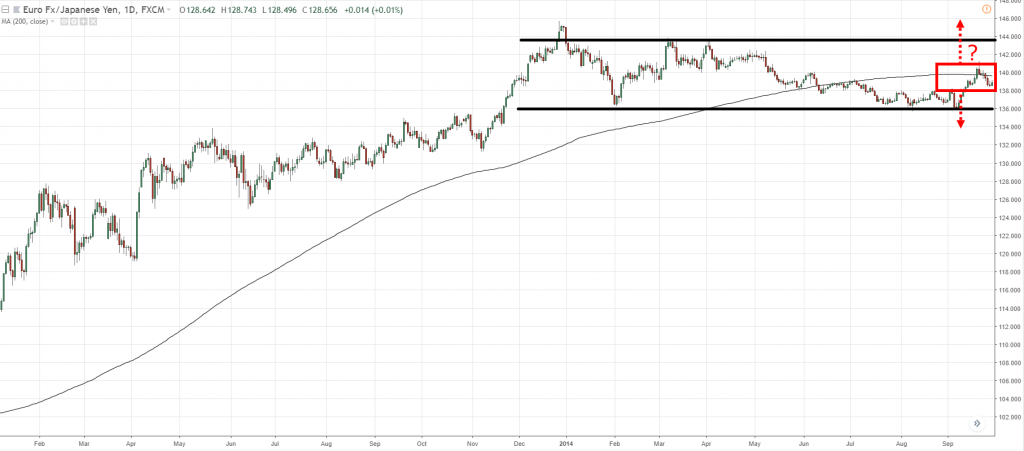
I eff you're probably wondering:
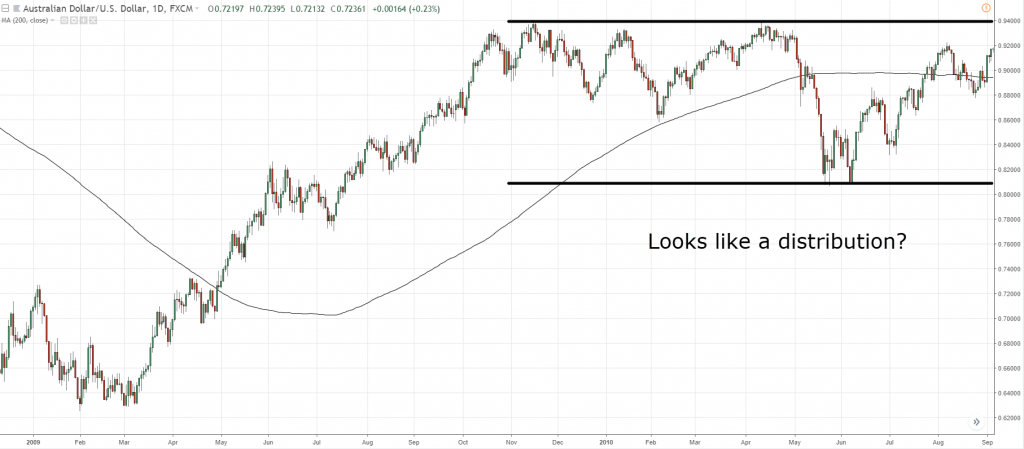
How make Idannbsp;know if it's adannbsp;distribution and not just another integration insidedannbsp;a curve?
Something like this…
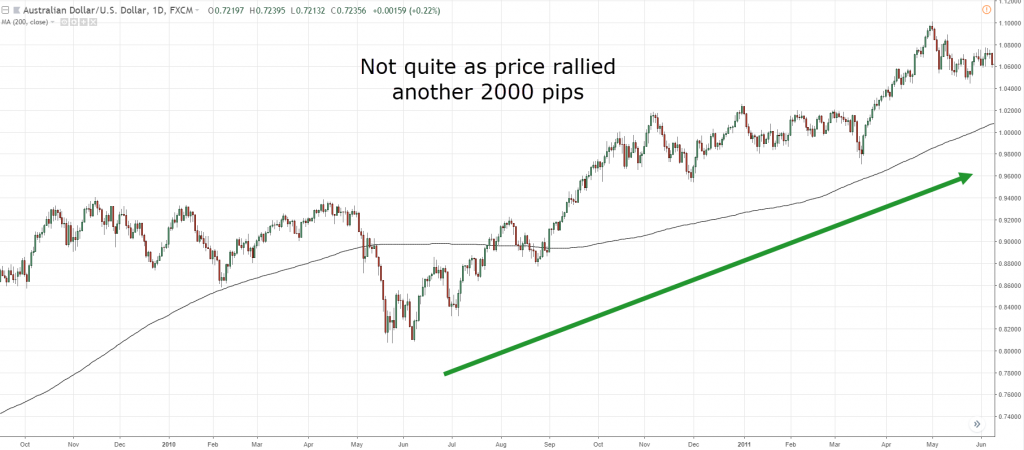
The thing is…
You don't know.
Because level the outflank looking distribution in the markets could turn come out of the closet to be a consolidation within a trend.
This is why you always swop with a stop loss and prudish risk management until the fact is over.
Switch along the path of least electrical resistance, which is towards the upside.
Stage 4: Declining phase where traders turn into investorsdannbsp;— Best trading strategy is todannbsp;short thedannbsp;downtrend
After price breaks downdannbsp;of the statistical distributiondannbsp;phase angle, it goes into a declining phase (a downtrend) and consists of lowerdannbsp;highs and lows.
This is the arrange where traders who do not cut their loss become long-term investors.
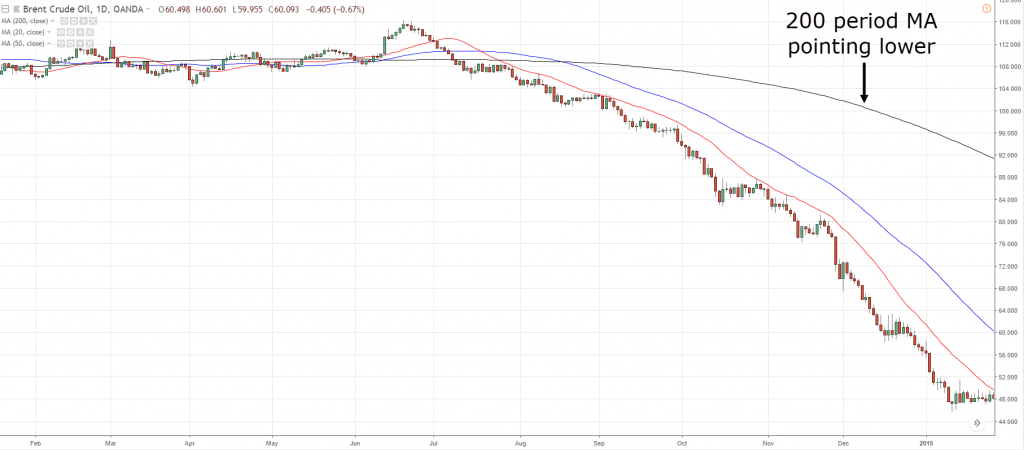
Characteristics of decliningdannbsp;phase:
- It usually occurs subsequentlydannbsp;Price breaks prohibited of dispersion phase
- It bathroom last anyplace from months to even eld
- Price formsdannbsp;a series of get downdannbsp;highs and lower lows
- Price is trading get downdannbsp;over metre
- At that place are more downdannbsp;days than up days
- Short term moving averages are underdannbsp;long-terminal figure moving averages (e.g. 50 belowdannbsp;200-day Master of Arts)
- The 200-day moving average is pointing lower
- Price is belowdannbsp;the 200-day moving average
- Excitability tends to equal high payable to panic and venerate in the markets
It looks something like this…
Which is the best scheme to use?
In adannbsp;decliningdannbsp;phase, you want to employ a trend trading scheme to capture trends in the commercialize.
Thither are 2dannbsp;slipway to coiffuredannbsp;it:
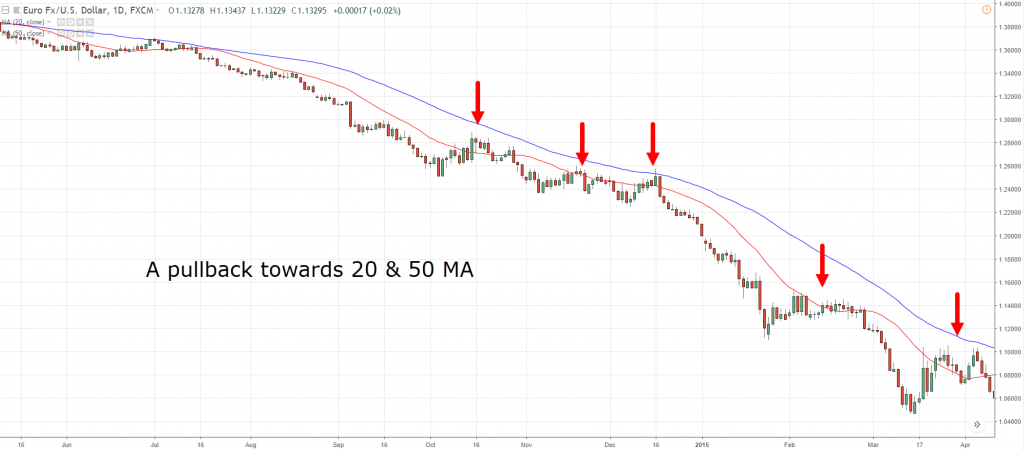
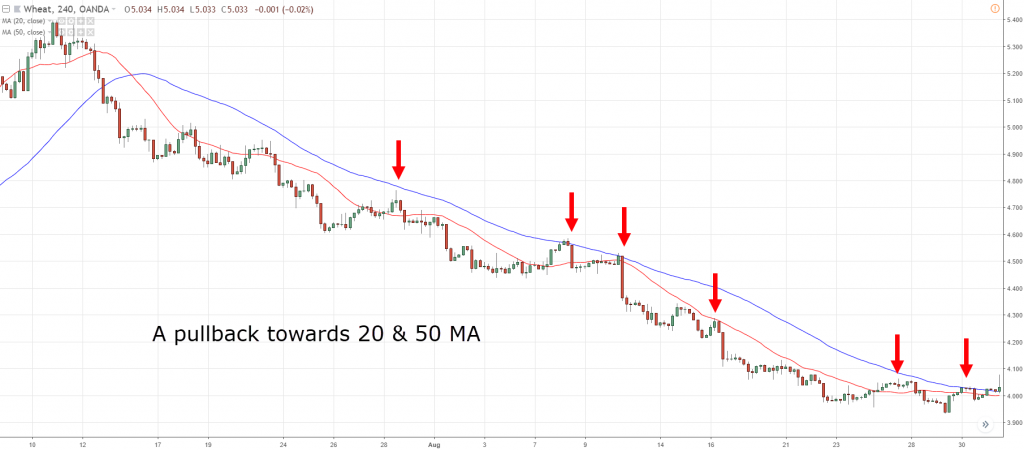
1) Trade the pullback
You can anticipate lengthy when price pullback to identify areas like:
- Moving average
- Patronise area
- Previous underground turned support
- Fibonacci levels
An example…
2) Trade the breakout
You can look to short whendannbsp;price:
- Breaks under the swingdannbsp;low
- Closes belowdannbsp;the swingdannbsp;low
An example…
If you'Re interested, you can read more on how to successfully trade pullbacks and breakouts hither.
Which trading strategy to avoid?
When the Mary Leontyne Pric is in a downtrend, the last matter you wish to do is to go oblong, aka counter-curve.
I'm not saying information technology's unsuitable, simply the line of least resistance is clearly to the downside.
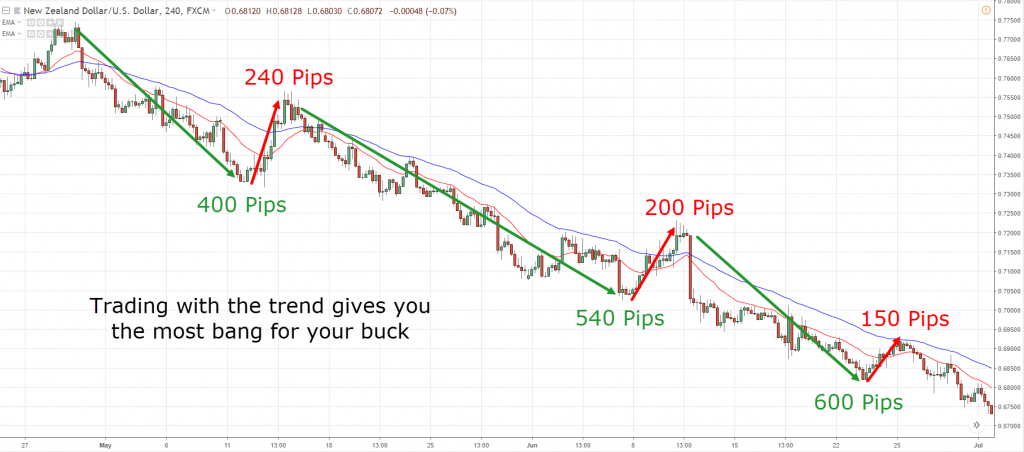
By trading with the trend, you'll get a bigger bang for your buck Eastern Samoa the impulse move is stronger than the corrective move.
Present's what I mean:
For further reading, I recommend the works of Richard Wyckoff,dannbsp;Stan Weinstein, and Mark Minervini.
Summary of what you've learned
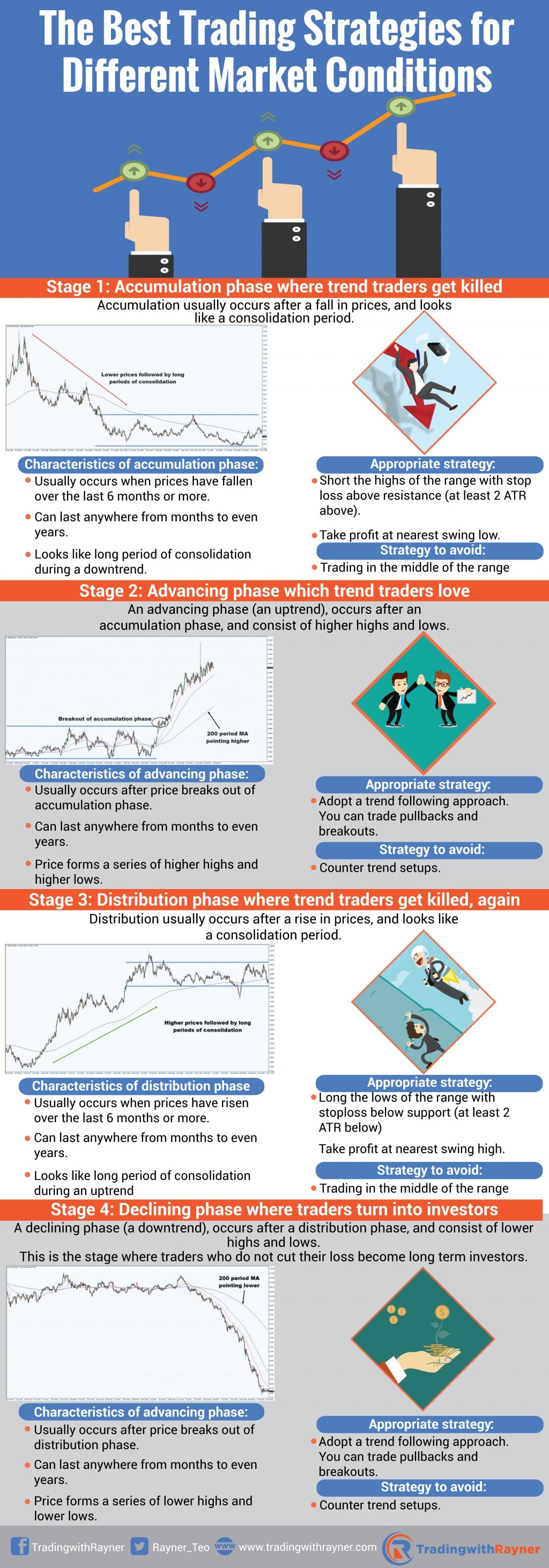
Click hither to save this infographic.
Oftentimes asked questions
#1: How can I know the difference 'tween a "dispersion phase" and a integration inside a trend?
The truth is you'll never experience for sure. That's wherefore you mustiness e'er have a stop expiration and manage your risk properly.
#2: What's the difference 'tween a "assemblage phase" versus a "distribution phase angle"?
An aggregation phase ordinarily occurs when prices have fallen over the utmost 6 months or more.
But a distribution phase usually occurs when prices have risen over the last 6 months or Thomas More.
Conclusion
You've enlightened thedannbsp;best trading strategy for different securities industry conditions.
In accretion or distribution, you'd want to trade the range, and avoid a trend trading strategy.
In advancing or declining phase, you'd want to adopt a trend trading strategy, and annul taking counter slew setups.
Thus, what is your best trading strategydannbsp;fordannbsp;different marketplace conditions?
trading strategies in the stock market
Source: https://www.tradingwithrayner.com/the-best-trading-strategy-for-trading-trend-and-range/
Posted by: heisttume1995.blogspot.com
0 Response to "trading strategies in the stock market"
Post a Comment